
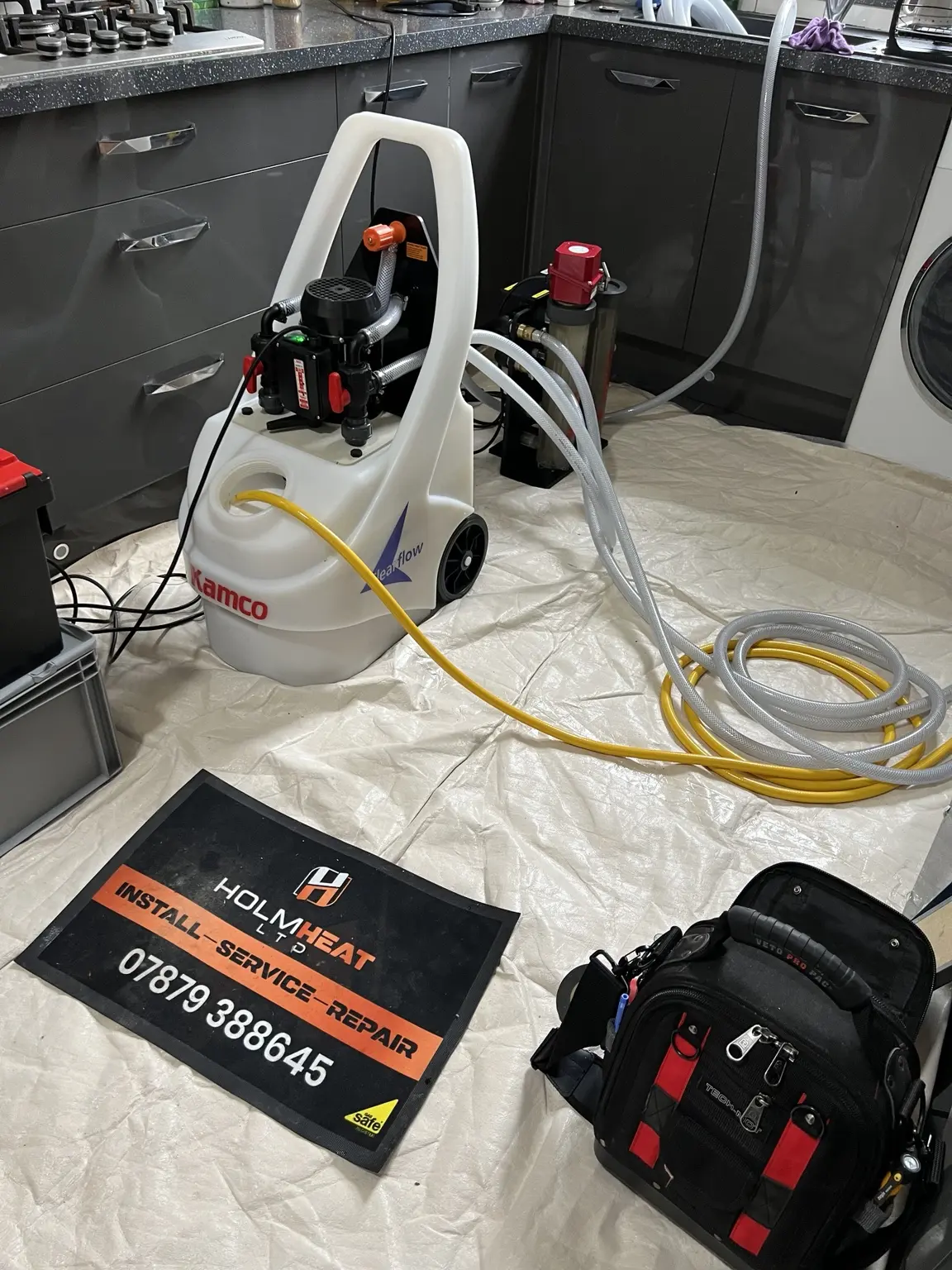
High-spec power flushing for sludge, restricted circulation and uneven heating, including restrictive 8mm and 10mm microbore systems, which need a different approach. Every system is assessed before a flush is recommended.
Free PDF
The HOLMHEAT Power Flush Guide
What a power flush involves, how Ross assesses a system first, and what it costs. Ask on WhatsApp or by email and Ross will send it straight to you.
Signs you might need one
Cold at the bottom
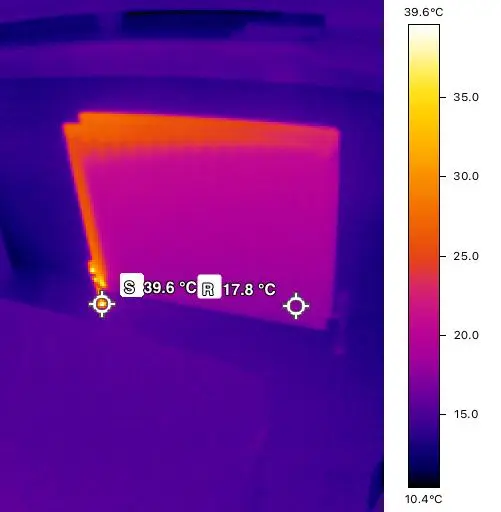
Radiators warm at the top but cold lower down are the classic sign of sludge.
Slow to heat
Rooms take ages to warm, or some radiators never get properly hot.
Noisy system
Banging, gurgling or a kettling boiler point to restricted circulation.
Dirty water
Black or brown water when a radiator is bled.
Filter clogging
Magnetic filter fills up quickly or pumps and valves keep sticking.
Repeat faults
Boiler faults that keep coming back after parts are replaced.
How Ross does it
- System survey and suitability assessment first
- Purpose-built high-flow flushing equipment
- Radiator-by-radiator isolation and flow reversal
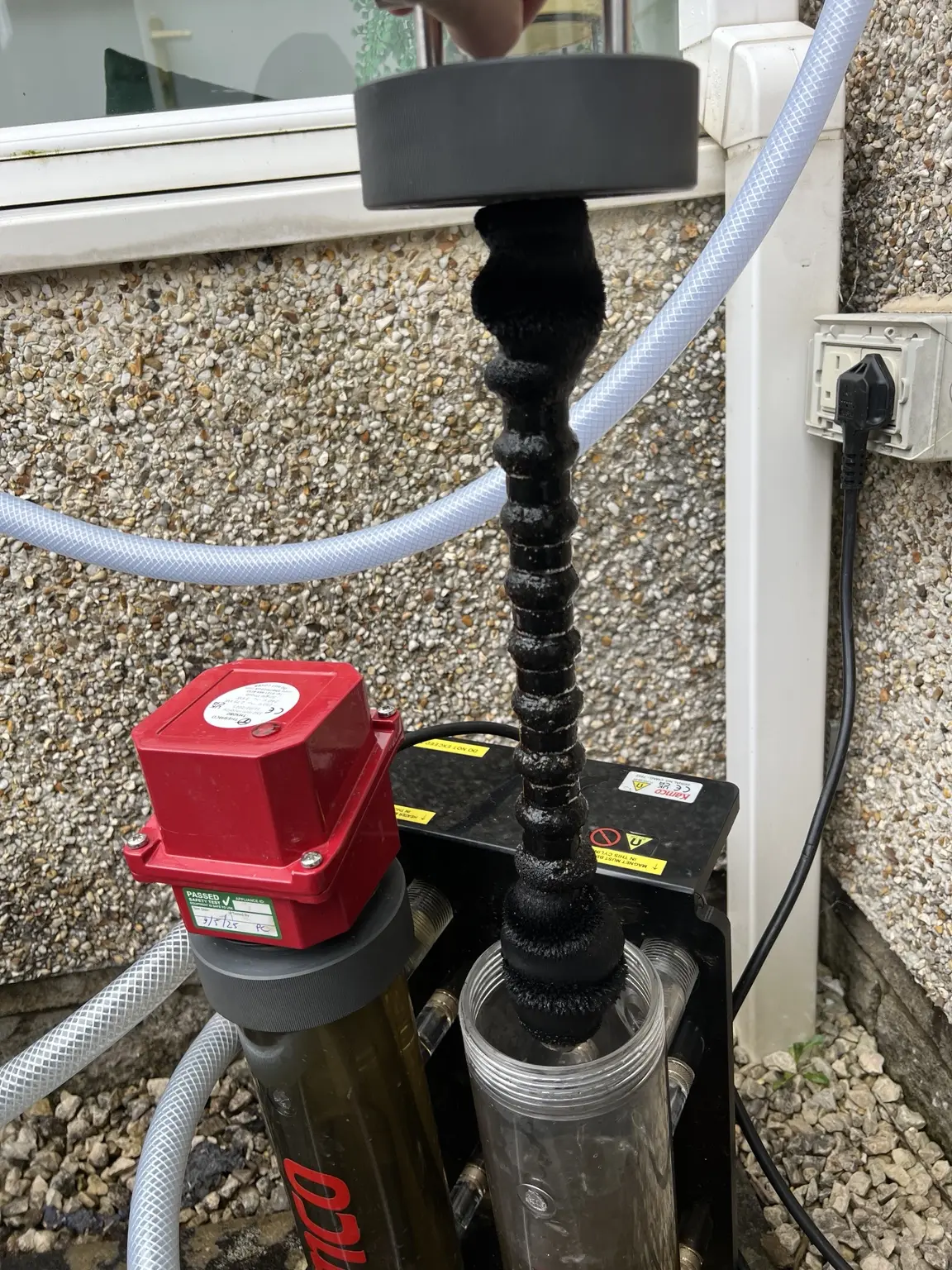
- Magnetic debris capture
- Thorough rinse and correctly dosed inhibitor
- Before-and-after thermal imaging and Delta T checks
A power flush does not change a boiler's official efficiency rating, cannot reverse corrosion or design faults, and cannot guarantee to clear every compacted blockage. It can also reveal weak points that were already there. No guaranteed savings claims, and no recommendation without an assessment.