
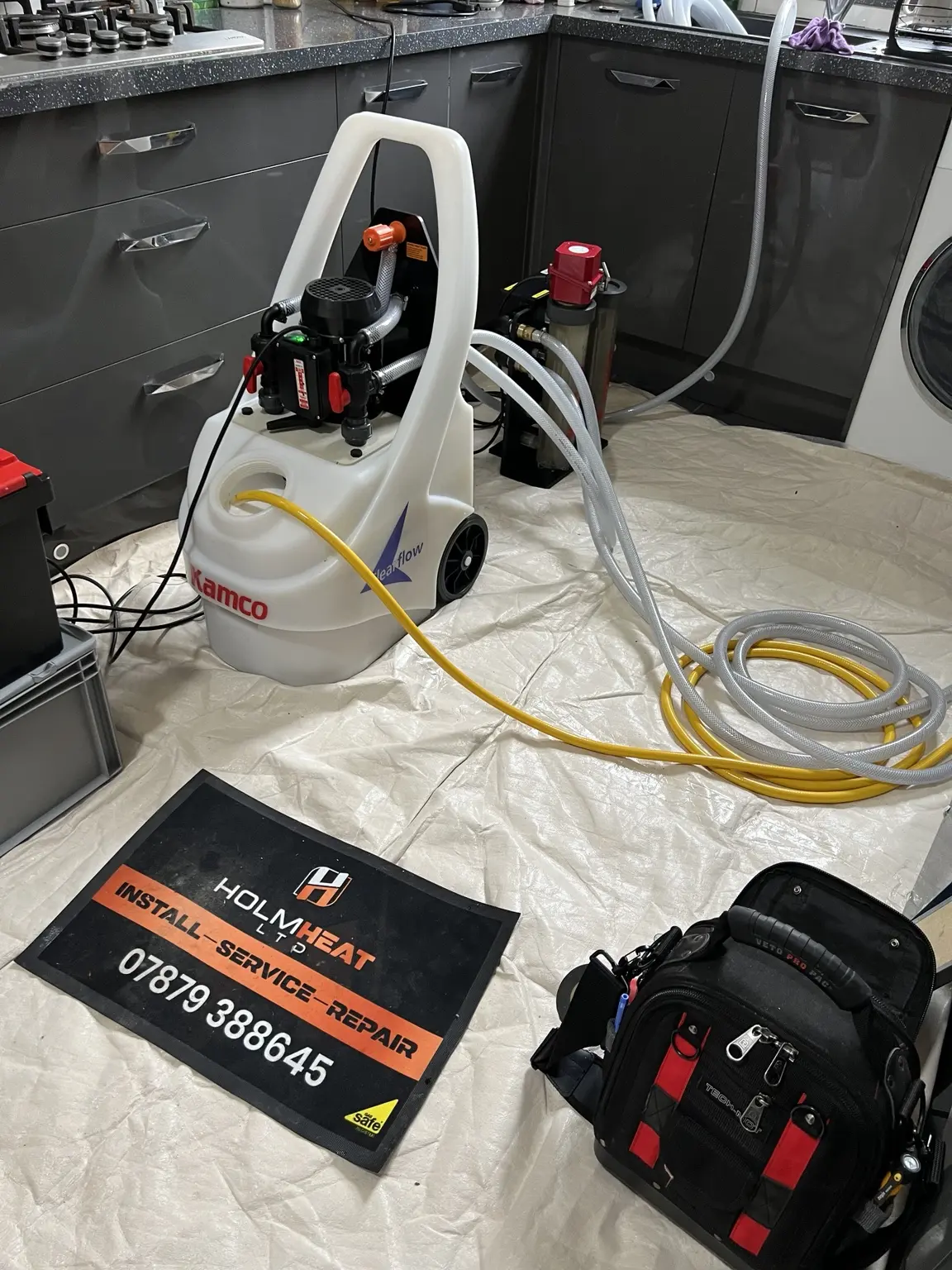
The water inside a heating system affects every radiator, valve and component it passes through. Corrosion products can build into dark sludge, restrict circulation and place extra strain on the boiler.
Signs of poor system condition
- Radiators cold at the bottom or slow to heat
- Noisy circulation or repeated boiler faults
- Dirty water when a radiator is bled or drained
- Valves, pumps or filters repeatedly blocking
Clean, protect and maintain
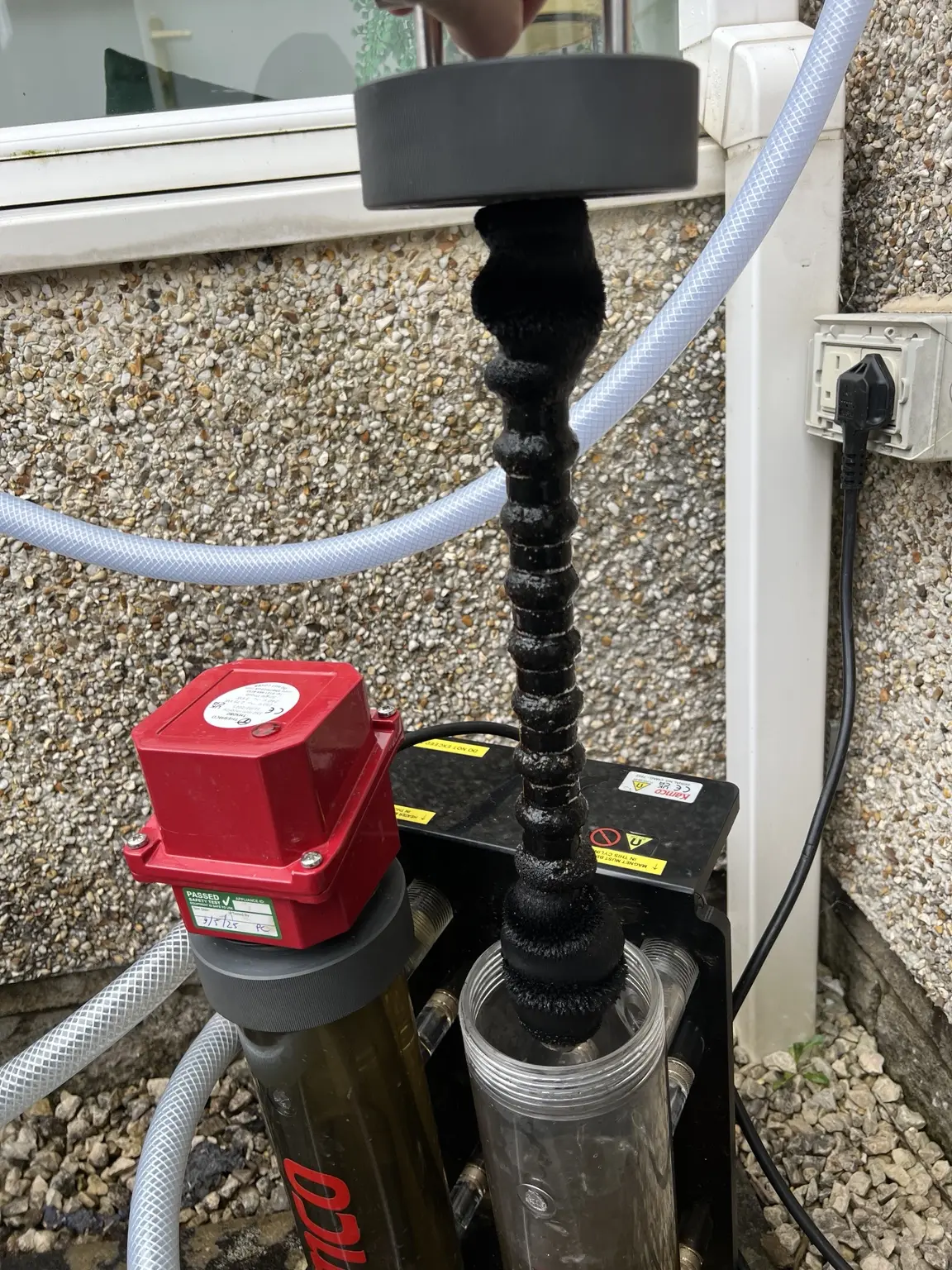
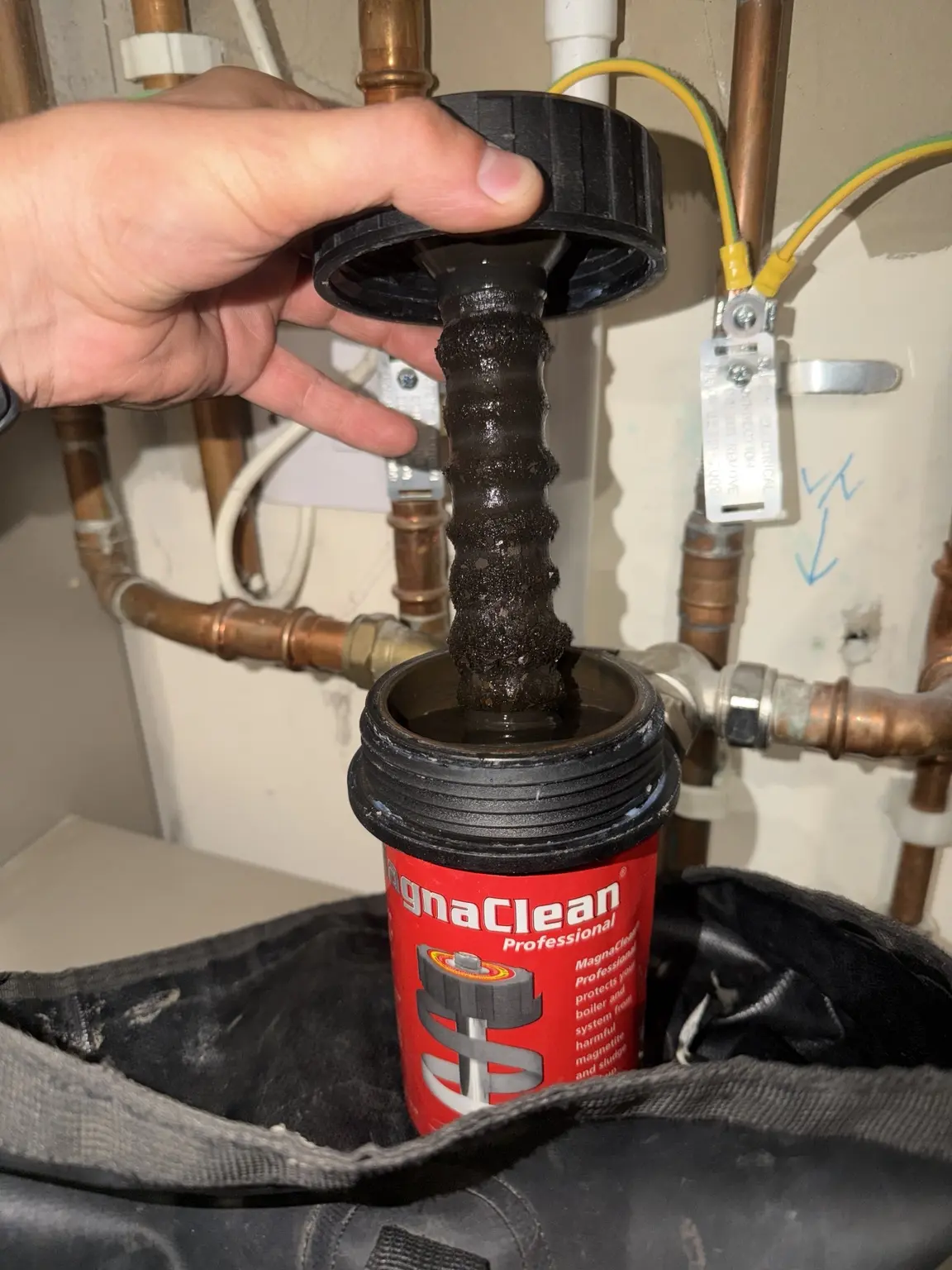
Good system care combines the right cleaning method with inhibitor and ongoing checks. A magnetic filter can capture iron-oxide debris, but it must be maintained to keep doing its job.
Does every system need a power flush?
No. The correct method depends on the symptoms, water condition and system design. Some systems need targeted cleaning; heavily contaminated systems may benefit from a more thorough flush. Assessment comes first.
Measured, not guessed
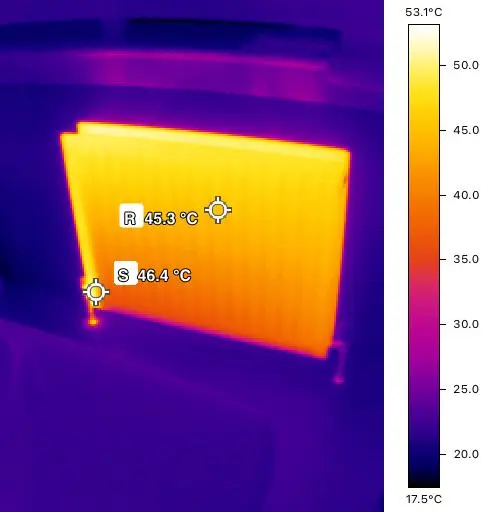
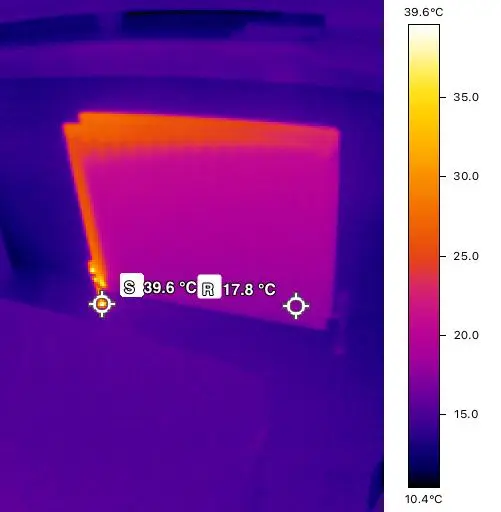
HOLMHEAT uses thermal imaging to trace hidden leaks and to compare the system before and after cleaning. Flow-and-return temperature readings, often called Delta T, show how heat is moving through the system.
When a boiler is replaced, the condition of the existing radiators and pipework still matters. Cleaning and protection help prevent old contamination being carried into the new appliance.